


A Contemporary Interpretation of "The Usefulness of Uselessness": The Spatial and Curatorial Aesthetics of Beniya Mukayu
Updated: Aug 25
On April 10, 2024, the final day of a trip through central Japan, the ultimate highlight was a stay at Beniya Mukayu, located on Mount Yakushi above Yamashiro Onsen. It was the most expensive accommodation I had ever stayed at during my travels abroad.
Beniya Mukayu is regarded as a benchmark of contemporary Japanese ryokan design and one of Japan's finest examples of design-driven hospitality. When I first encountered hospitality design during my years working in architecture, it repeatedly served as a reference project for study. Yet my impression of it had long remained centered on its lush, secluded entrance and the highly refined corporate and visual identity created by Kenya Hara. It was only while planning this journey that I realized I would be passing nearby and finally had the opportunity to experience the place in person. At first, the cost made me consider giving up the stay, but with financial support from my company, the visit eventually became possible. In the end, the experience far exceeded expectations. From the perspective of architectural research and learning, it was tremendously rewarding; as a hospitality experience, it also received a rare evaluation of "Fresh" from someone who has stayed in a great many hotels and accommodations.
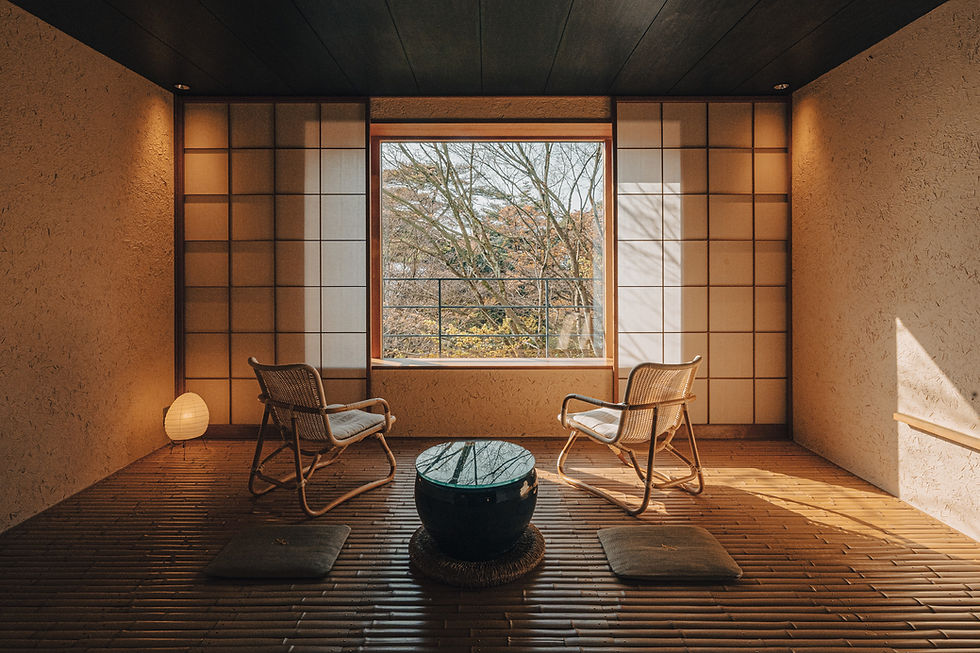
Beniya Mukayu is a member of Relais & Châteaux, the renowned international association of luxury hotels and restaurants. Its history began with the first generation operating a ryokan in the center of Yamashiro Onsen. The second generation later relocated the inn to its present setting on Mount Yakushi, overlooking the town. With the third generation, the owners invited Japanese architect Kiyoshi Sey Takeyama to gradually redesign and expand the property, eventually giving rise to the architecture seen today. The hotel's current identity was further shaped through collaboration with graphic designer Kenya Hara.
The name Mukayu derives from the concept of mukayu no sato—"the land of nothing"—described in Zhuangzi's Free and Easy Wandering. It evokes a place in which "uselessness" becomes a form of value, and in which an empty room allows the light of the mind to emerge. Beniya Mukayu seeks to create such a space: a place where guests can temporarily set aside the trivial concerns of everyday life, empty both body and mind, and immerse themselves in an atmosphere removed from ordinary existence, quietly receiving the presence of nature. This philosophy is reflected directly in the architecture. The spaces make extensive use of emptiness, fluidity, and simplicity, allowing nature, light, and materials with natural textures to move freely through the architecture. At the same time, the design remains deeply rooted in the atmosphere of the traditional Japanese ryokan, producing a contemporary reinterpretation of tradition rather than simply reproducing it.

The resulting atmosphere possesses qualities of both Japanese architecture and the modern resort hotel. Unlike the relaxed, almost carefree tropical character often associated with Bali, Mukayu develops a far more restrained and distinctive identity. This seems closely connected to the tastes and curatorial vision of its owners: experiences such as the Japanese tea ceremony personally hosted by the owner, a spa incorporating traditional local herbal practices, three libraries filled with books on art and culture, and the many installations and antique objects placed throughout the property.
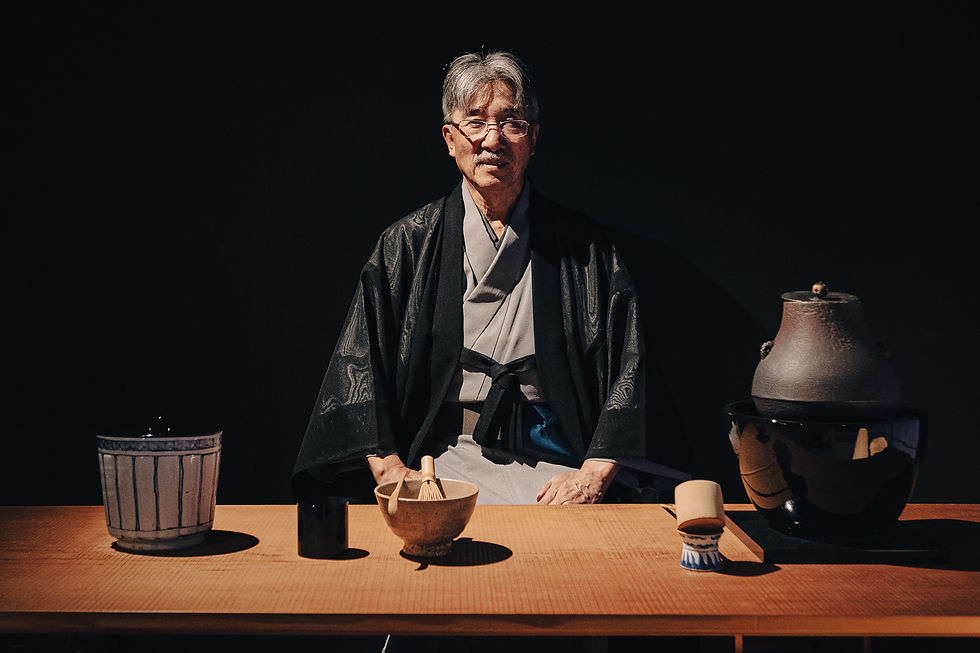
These activities and spatial elements infuse the ryokan with a rich cultural and literary atmosphere, yet the overall experience never feels contrived or ostentatious. Despite the richness of its content, everything maintains a sense of unity, naturalness, and freshness. Achieving such coherence requires an exceptionally sophisticated aesthetic sensibility, one capable of extending consistently across space, material detailing, and brand identity. For this reason, what I particularly appreciate about Mukayu is the way its design extends beyond architecture into even the smallest objects and printed materials. The amenities are also designed by Kenya Hara under the name "Yakushiyama," combining various herbs and minerals into a series of bathing and body-care products. In this sense, the identity of the place is not confined to architecture itself, but continues seamlessly into the objects that guests encounter in everyday use.
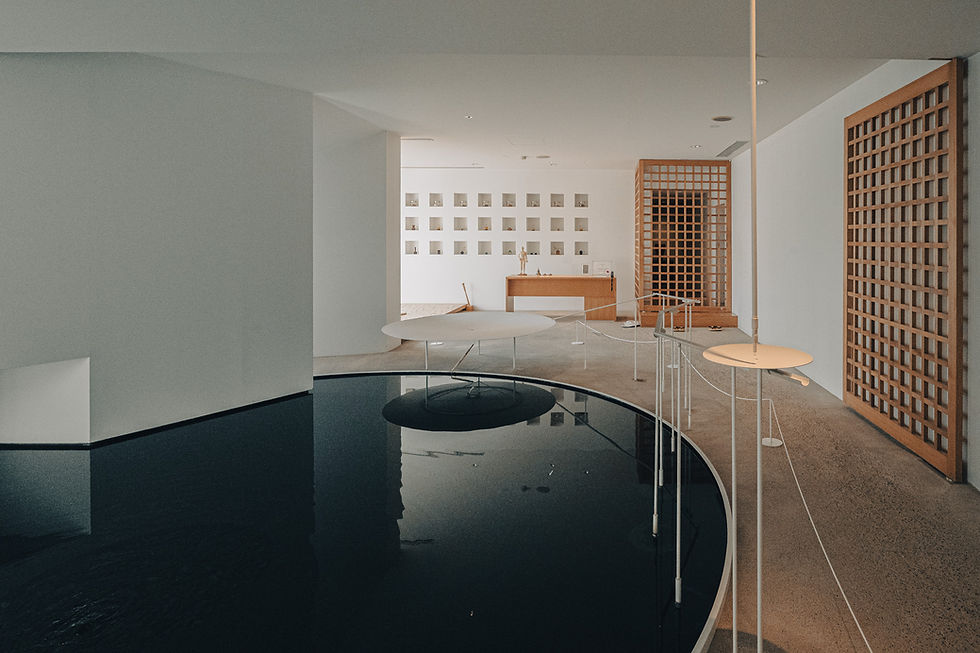
Beniya Mukayu can be regarded as one of the relatively few hospitality establishments in Japan to pursue such a high degree of refinement in both aesthetics and overall curation. The exceptionally high proportion of Western guests during the stay—roughly eight or nine out of ten—also revealed how precisely the property has positioned itself within the international luxury hospitality market.
For budget-conscious travelers, the room rates are undeniably expensive, and the dining experience may not necessarily rank among the very finest. Yet the meticulous service and the ease of communicating in fluent English left an exceptionally strong impression. Before leaving, I had the opportunity to speak briefly with the owner, expressing my appreciation for the place and gratitude for the hospitality. It was a fitting and memorable conclusion to the night.


Comments